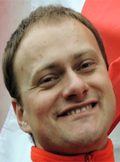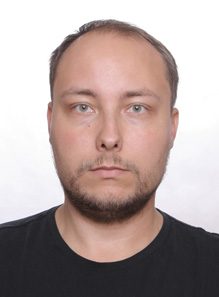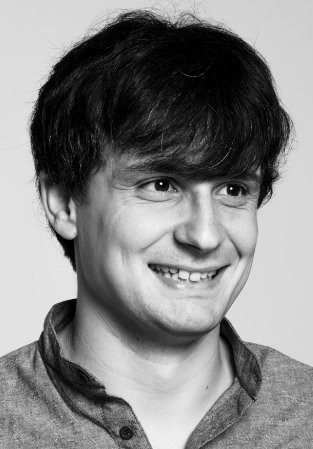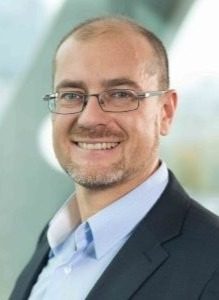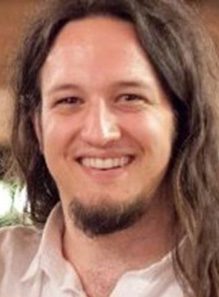
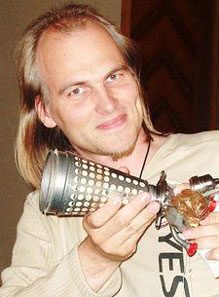
Dr. Michiel Kruijff

Dr. Michiel Kruijff

Director

Dr. ir. Michiel Kruijff has 25+ years of experience in satellite design, systems engineering, R&D and team management.

At Delta-Utec SRC, from 1996–2009, Michiel led the development of several ground-breaking technology demonstration satellites (YES1, TEAMSAT, YES2) and a re-entry capsule (Fotino). YES1 was the first satellite built by ESA according to the skunkworks approach (1997). YES2 broke a world record by deploying the longest man-made structure in space (a 32 km tether, 2007). Fotino was the lightest fully equipped re-entry capsule ever built. He was co-initiator of JAXA’s T-REX experiment (2010), which was the first deployment and in-space demonstration of a bare electrodynamic tether. With Erik van der Heide, Michiel developed the SSATT / ADTE star sensor algorithms and test environment (1998–2009), which set new standards for star sensor performance.

From 2009–2013, for the European Space Agency, Michiel managed the development of innovative services in the field of sustainability and safe living, incl. asset management, risk mapping and operations monitoring solutions. He also initiated ESA’s Ambassador Platform on Water Management.

From 2013–2022, Michiel led the development of the 150 kW airborne wind energy system for Ampyx Power, the “AP3”, and then prepared the development of a 1 MW successor, AP4. AP3, a fully automatic drone with a 12 m wingspan and single-fault tolerant, as well as the ground-based power generator, have been fully qualified using stringent aviation design processes (ARP-4754A/AS9100). AP3 is one of the first drones in Europe to be safety-approved by EASA to SAIL III. Michiel initiated the 12 MEuro international cooperation MegaAWE (Interreg NWE) with 25 partners, centred around airborne wind energy demonstration in County Mayo, Ireland.

Since 2022, Michiel has supported innovative companies in the sustainability sector, like TwingTec, Speeder Systems, The Ocean Cleanup and Oceans of Energy, and helped define their innovation programmes, demonstration projects and/or grant application strategies. Michiel is Innovation Advisor at Kitepower.

Michiel holds a PhD with Honours in Space Systems Engineering and Sustainable Technologies and an MSc with Honours in Aerospace Engineering / Orbital Mechanics, both from Delft University of Technology. As a hobby, Michiel likes to go wingfoiling on the lake by his house. In 2021 he published, to critical acclaim, the first English translation of a famous Dutch epic poem (Mei/May by Herman Gorter).
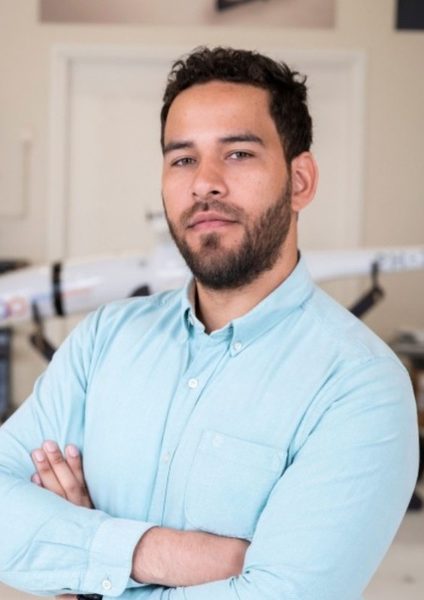
Daniel Bigott

Daniel Bigott

Senior product designer & mechanical engineer

Daniel Bigott is a Senior Product Designer and Mechanical Engineer who can deliver the product prototype that you need, typically designed and tested within months. Daniel has over twelve years of experience delivering innovative, high-performance solutions across the automotive, energy storage, heavy equipment and public infrastructure industries. Proficient in Creo, SolidWorks, Siemens NX and Inventor, he excels at creating parametric 3D models, performing FEM analysis and adhering to ISO standards.

Daniel is a motivated end-to-end developer, with expertise that spans the full product lifecycle – conceptualization, prototyping, validation and production. His extensive hands-on experience covers energy, automotive, maritime and aviation applications. He was responsible for the development of complex mechanisms for Europe’s most advanced civil drone, the AP3, as well as high-speed and high-energy equipment for ground testing, including aviation-grade quick-release systems, maritime-grade cable guidance mechanisms and fluid circulation solutions. He furthermore led projects including advanced automotive actuators and mass-production designs for train station facilities, focusing on DFM and DFA for efficient manufacturing.

Sebastiaan Engelen

Sebastiaan Engelen

Aerospace engineer, design & prototyping

Sebastiaan Engelen is an aerospace engineer from Delft University of Technology, with extensive experience in conceptual design, aircraft design, systems design, composite structures and aerodynamics. He started his career in prototype drone production for airborne wind energy, where he conceptualized and optimized initial system sizing based on dynamic analysis of the full system. He evolved into leading the design and production of 12 m span drones.

Today, he manages his own workshop (anymaker.nl), crafting bespoke and refined wooden furniture and designing furniture industry tools. In parallel, Sebastiaan collaborates with businesses on diverse prototype projects. He has a passion for hands-on engineering and production and is always eager to learn new production processes himself.

Dr. Marcin Stolarski

Dr. Marcin Stolarski

Space communication & fault-tolerant systems

Marcin Stolarski was born in 1976 in Warsaw, Poland. He received his Ph.D. degree at Warsaw University of Technology in 2010. His research interests and work are related to space technology, focusing on communication systems, distributed networks and fault-tolerant systems. He is the author and co-author of many documents concerning space systems. He works at the Space Research Centre, Polish Academy of Sciences, in projects like BRITE-PL (the first Polish scientific satellites) and STIX (Solar Orbiter experiment for the European Space Agency). He worked for Polish space company Astri Polska, where he cooperated in projects such as RecAv (a new reconfigurable computer in FPGA technology for space applications).

In 2013 he created his own company, Marcin Stolarski Laboratory, to focus on RF systems using Software Defined Radio technology. In his spare time he popularizes science. He is a winner of the 1st prize in FameLab Poland and winner of the semi-final in FameLab International. In the same year he participated in a two-month scholarship at the University of California, Berkeley, Haas School of Business in the Top500Innovators training programme. When he came back to Poland he designed the BikeMic project (a system for safe music listening on the bicycle).

Five most important projects he was involved in:

  • BRITE-PL (first Polish scientific satellites) – managed the BRITE-PL satellite constellation communication systems
  • STIX – managed and designed the STIX Spectrometer/Telescope for the Solar Orbiter mission phase B (ESA project)
  • SACC – manages and designs the Satellite Adaptive Communication Channel based on Software Defined Radio technology (ESA project)
  • RECAV – managed and designed an adaptive fault-tolerant computer for space missions based on FPGA technology
  • SPEKTROP – designed a very high-speed data acquisition system for hyper-spectral imaging based on FPGA technology
Dr. Rafal Graczyk

Dr. Rafal Graczyk

Satellite electronics & data acquisition

Rafal has 7 years of experience in designing satellite systems electronics, with a focus on imaging data acquisition, on-board data processing and control hardware, and power subsystems.

Amongst his recent achievements was the granting of a patent for an effective architecture of FPGA/ASIC-based high-speed data acquisition systems for airborne and space-borne imaging systems, and 1st prize in the Airbus Defence & Space (EADS Astrium) competition for best PhD thesis proposal: “Dependable space equipment implementing dynamic partial reconfiguration of FPGA devices”.

He has worked as project manager, systems engineer and electronics specialist, designing very high-speed data acquisition systems for hyper-spectral imaging, and led the team developing and supporting on-board computers and power systems for the first two Polish scientific satellites (BRITE-PL project).

He is currently leading work on a payload data processing system for large space-borne systems. His past work includes designing and assembling engineering, qualification and flight models of the stepper motor driver for the YES2 satellite. Rafal is based in Warsaw, Poland.

Marco d’Alessio

Marco d’Alessio

Electronics, power & avionics

Marco d’Alessio is a highly motivated aerospace engineer with 10+ years of experience in dynamic and diverse environments, from big corporates to fast-paced start-ups, including Ampyx Power, The Ocean Cleanup and Electron Aviation. Proficient in analogue and digital circuit design, he can deliver end-to-end electronics, power and avionics solutions with emphasis on the design of safety-critical systems, based on a systematic design approach according to aerospace standards. He is an effective communicator with a problem-solving attitude, energized by challenges and pioneering innovations.

Dr. Miguel Ángel López Trujillo

Dr. Miguel Ángel López Trujillo

Business development coach

Dr. Miguel Ángel Trujillo is a business development coach with venture capital and methodological expertise who worked with several accelerators like S2xpeed. After years of working in accelerators, he decided to build a much more in-depth business coaching programme focused on growth, working with clients in full-package formats rather than billing hour by hour, as accelerators typically do.

Miguel’s coaching programme includes 10 sessions over 4 months. With a proven track record of helping tech and innovative firms triple their revenue and elevate their brand prestige, the programme provides tailored strategies that address both business and personal challenges: core process inefficiencies, business model refinement, leadership skills and much more. The programme has proven (see testimonials) to support companies in building leadership, strategic focus, increasing revenue and raising funds. It adds most value at VC stage (TRL6 and up) for companies that want to thrive, not survive, seek to refine their business model, sales processes and customer fulfilment, and need to evolve the management team accordingly. Miguel thus complements perfectly the Delta-Utec IAS TRL-development and company growth support services.

Dr. Alejandro Salado

Dr. Alejandro Salado

Systems engineering

Dr. Alejandro Salado is an assistant professor of systems science and systems engineering with the Grado Department of Industrial and Systems Engineering at Virginia Tech, where he balances research, teaching and private consulting. Previously he was employed as a Systems Engineer with OHB System AG, a Satellite Systems Engineer with EADS Astrium GmbH (now Airbus Defence and Space), an Electronics Engineer with SENER-NTE S.A., a Stagiaire Electrical Systems Engineer with the European Space Agency (ESA), and an Intern Electronics Engineer with Delta-Utec SRC. His work focuses on problem definition, elicitation of stakeholder value, architecture of affordable and elegant systems, and embedding strategic intent in engineering activities over the entire system life cycle. Moreover, Alejandro has developed a successful track record in pragmatically infusing the latest developments in the fields of systems engineering and engineering management in industrial contexts.

Alejandro has been exposed to a wide variety of manned and unmanned space systems and his efforts have contributed to several projects, including PLATO 2.0, Space Weather (SWE), EnMAP, DARPA’s F6 program, Galileo In-Orbit Validation (IOV), MARES, and Young Engineers’ Satellite 2 (YES2) among others. He holds a BSc/MSc in electrical engineering from the Polytechnic University of Valencia, an MSc in project management and an MSc in electronics engineering from the Polytechnic University of Catalonia, the SpaceTech postgraduate Master in space systems engineering from Delft University of Technology, and a PhD in systems engineering from the Stevens Institute of Technology.

Among others, Dr. Salado received the Fabrycky-Blanchard Award for Systems Engineering Research and the Stevens Institute of Technology Outstanding Dissertation Award in 2014, the Fulbright International Science and Technology Award and a Stevens Fellowship in 2010, and a team Guinness World Record in 2009 for the longest man-made structure ever deployed in space with the YES2 project.

Eva Rodriguez

Eva Rodriguez

Programme & systems management

Eva has been involved in the research, definition and management of programmes and systems/software development projects, working hand in hand with governmental agencies, universities, research organizations, industry and user communities in the satellite communications, satellite navigation, remote sensing and mobile networks markets.

She has worked as Technical Officer and Project Manager for the ARTES Applications programme of the European Space Agency (ESA), and as researcher and telecommunications engineer for the Vienna University of Technology and for Siemens AG. Eva holds a Master of Science in Telecommunications Engineering and Management, a degree in Telecommunications Engineering and a Bachelor in Telematics from the Polytechnic University of Catalonia (UPC).

Her interests include spatial information technologies, geographic information systems (GIS), systems engineering and emergency response. She currently volunteers as Stakeholder Engagement Support Officer for Australian Red Cross Emergency Services (Victoria).

Taking a hardware innovation to market?

Tell us where you are on the road from TRL2 to product. We’ll tell you how we can help.

Get in touch